
Thailand’s tourism industry is facing renewed uncertainty as hotels in Phuket, Bangkok, and other popular destinations report cancellations from Chinese travelers following a safety warning published online by the Chinese Embassy in Bangkok on October 16, 2026. The advisory, which highlighted kidnapping, human trafficking, and criminal scams targeting Chinese nationals, has raised concerns about visitor confidence just as hotels prepare for the lucrative high season.
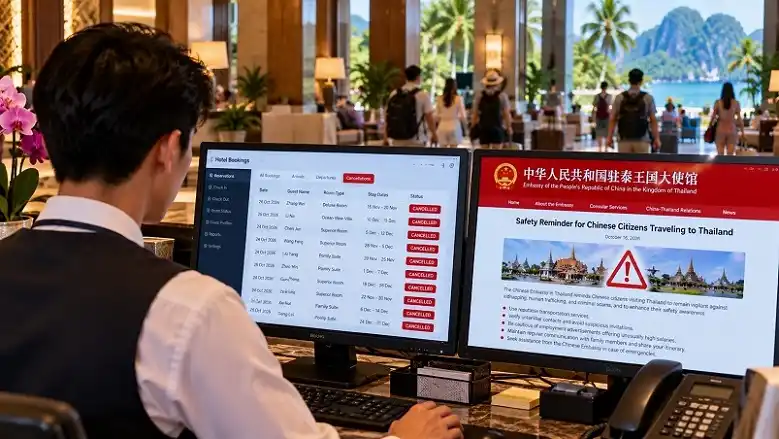
Image Credit: Phuket Hotel News
Many Phuket hotels are reporting cancellations, particularly involving advance reservations for November, December, and the year-end holidays. As this Phuket Hotel News report highlights, the situation threatens to disrupt a crucial booking period when accommodation providers traditionally depend on Chinese tourists to support occupancy and revenue. Although comprehensive cancellation statistics remain unavailable, emerging reports suggest that concerns about personal safety are influencing holiday decisions.
Recent news coverages by media in China highlight cases of kidnappings, extortion and robberies against Chinese travelers in Thailand that were never reported in local Thai media are also compounding the hotel booking cancellations.
Chinese Embassy Warning Raises Alarm
The Chinese Embassy’s advisory urged citizens traveling to Thailand to exercise heightened caution following reports of abductions, fraudulent employment schemes, and trafficking operations.
Chinese visitors were encouraged to use reputable transportation services, verify unfamiliar contacts, avoid suspicious invitations, and maintain regular communication with family members.
The warning also highlighted employment advertisements promising unusually attractive salaries, particularly opportunities targeting entertainers, social media personalities, and people seeking overseas assignments.
While the advisory did not discourage all travel to Thailand, its publication has intensified concerns among prospective visitors already exposed to disturbing reports circulating across Chinese social media.
Phuket Hotels Face High-Season Booking Uncertainty
For Phuket’s hospitality sector, the timing could hardly be worse.
October traditionally marks the transition toward stronger international arrivals, with November through February representing an important revenue-generating period for beachfront resorts, luxury hotels, boutique properties, and tourism businesses.
Chinese tourists have historically represented a significant customer segment for Phuket, supporting accommodation providers alongside restaurants, shopping outlets, transportation operators, and island excursion companies.
Advance reservation cancellations create additional complications because hotels establish room pricing, staffing schedules, and promotional strategies around anticipated occupancy.
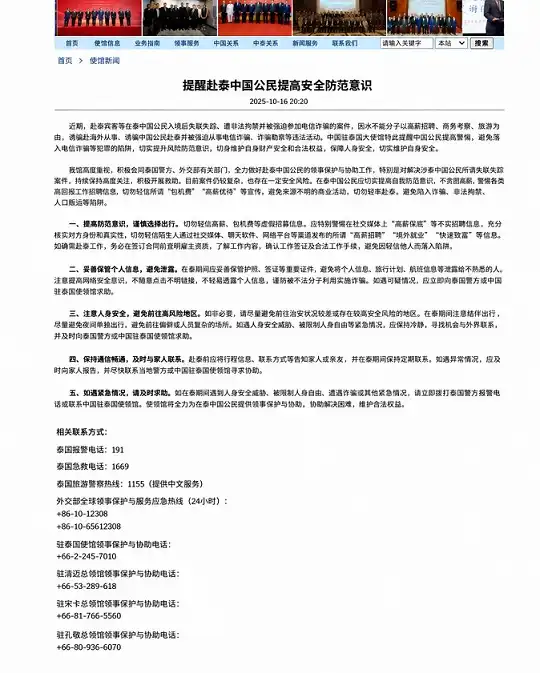
Image Credit: Chines Embassy of Thailand
Interestingly many other nationals from other countries are also taking heed of the warnings and are also canceling their travel and hotel bookings in Thailand.
Properties heavily dependent on Chinese tour groups and independent travelers could face increased pressure to offer discounts if cancellations continue.
Some Chinese holidaymakers are reportedly reconsidering Thailand in favor of destinations such as Japan, Vietnam, and Malaysia, although the extent of this shift remains unclear.
Kidnapping Cases Fuel Growing Anxiety
Recent criminal incidents involving Chinese nationals have contributed significantly to the deterioration in traveler confidence.
In early October, a 34-year-old Chinese photographer reportedly disappeared after arriving in Bangkok. His relatives subsequently received a ransom demand, prompting appeals to authorities in Thailand and China.
Another incident reported by The Beijing News in August involved a Chinese woman allegedly abducted after entering a vehicle she mistakenly believed belonged to her tour guide.
She reportedly escaped and sought assistance at a police checkpoint.
These cases have received attention in Chinese media, while some allegations have attracted comparatively limited coverage within Thailand.
The resulting information gap has complicated efforts to reassure potential visitors, particularly families concerned about traveling independently.
Trafficking Networks Damage Thailand’s Reputation
Thailand’s association with cross-border criminal networks remains another significant concern.
On October 10, authorities arrested a 30-year-old suspect in Tak province over alleged involvement in trafficking three Chinese nationals through deceptive employment offers.
Criminal syndicates operating around the Myanmar border have repeatedly exploited Thailand as a transit point for victims recruited into fraudulent online operations.
The January 2025 disappearance of Chinese actor Wang Xing remains particularly damaging to Thailand’s international image.
Wang was reportedly deceived by a fraudulent acting opportunity before being trafficked into Myanmar, generating widespread publicity and anxiety among Chinese travelers.
Although many scam compounds operate outside Thai territory, their connections to trafficking routes through Thailand continue to influence perceptions of safety.
Tourism Businesses Could Face Wider Financial Pressure
The potential consequences extend considerably beyond hotel occupancy.
Reduced Chinese arrivals could affect Phuket’s restaurants, retail businesses, airport transportation services, tour operators, entertainment venues, and marine excursion providers.
Hotels experiencing weaker forward bookings may introduce promotional packages or reduce room rates, potentially affecting profitability during their most important trading months.
Earlier tourism projections for Chinese arrivals had reportedly been revised downward from approximately nine million to seven million, reflecting existing challenges in rebuilding the market. However with the new warning, that figure could even fall more.
Additional safety concerns could further undermine those expectations, although reliable figures measuring the latest warning’s impact are not yet available.
Restoring Confidence Becomes an Urgent Priority
Thai authorities and tourism operators now face mounting pressure to demonstrate that visitor safety remains a priority.
Visible enforcement against trafficking organizations, improved tourist assistance, reliable transportation arrangements, and closer cooperation with Chinese authorities could help restore confidence.
For Phuket, maintaining its reputation as a welcoming international holiday destination will require more than promotional campaigns. Travelers increasingly expect credible assurances that reported security threats are being addressed effectively.
The immediate challenge is preventing isolated criminal incidents and negative publicity from developing into a prolonged downturn in Chinese tourism. With high-season reservations already under pressure, transparent communication, stronger security measures, and coordinated industry action will be essential to protecting Phuket’s hospitality economy and rebuilding trust among prospective visitors.
The official Chinese Embassy advisory can be accessed at: https://th.china-embassy.gov.cn/sgxw/202610/t20261016_12042063.html