
Phuket’s hotel industry is confronting another serious challenge after torrential seasonal rains unleashed flash floods and mudslides across several popular tourist destinations. Flooded streets, disrupted transportation routes, and water-damaged properties have placed additional pressure on hospitality operators already navigating rising costs and intense competition.
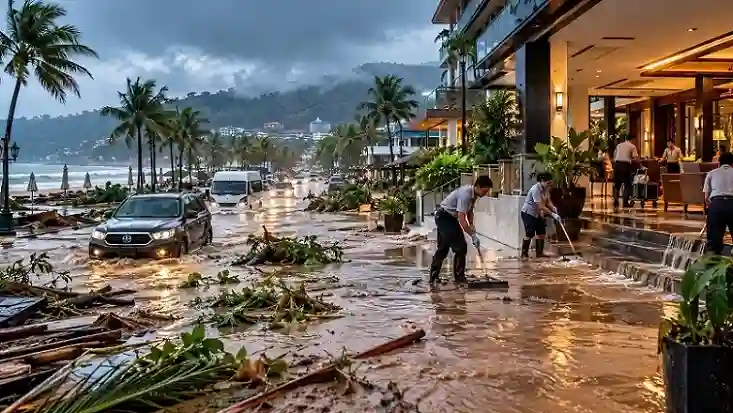
Image Credit: Phuket Hotel News
The flooding has highlighted the vulnerability of Thailand’s premier island destination to increasingly disruptive weather conditions. This Phuket Hotel News report examines how hotels are managing operational difficulties, protecting guests, and confronting the expensive task of restoring normal services while maintaining international traveler confidence.
Popular Tourist Districts Face Severe Disruptions
Patong, Kamala, and parts of Kata were among the coastal tourism areas affected by heavy rainfall and overwhelmed drainage systems.
Floodwaters inundated low-lying streets, creating transportation difficulties and temporarily restricting access to certain hospitality establishments. Mudslides and accumulated debris further complicated movement along vulnerable hillside routes.
Although many larger resorts benefit from elevated construction, smaller boutique hotels, ground-floor accommodations, and beachfront businesses faced greater exposure to water intrusion.
Damaged furnishings, electrical disruptions, and contaminated facilities created additional operational challenges.
Interrupted deliveries also threatened hotel supply chains, particularly those dependent on daily food shipments, laundry services, and external maintenance contractors.
Hotel Workers Scramble to Protect Guests
Guest safety quickly became the hospitality sector’s foremost priority.
Hotels responded by strengthening internal communications, monitoring weather developments, and adjusting services to accommodate travelers unable to leave their properties.
Indoor activities, modified dining arrangements, and flexible transportation assistance helped minimize inconvenience during periods of restricted movement.
Some establishments also introduced flexible checkout arrangements and emergency accommodation options for guests experiencing transportation disruptions.
Properties situated near steep hillsides faced additional concerns about unstable ground conditions, emphasizing the importance of evacuation preparedness and continuous monitoring.
Smaller Hotels Face Mounting Financial Pressure
As floodwaters subsided, attention shifted toward cleaning, structural inspections, equipment replacement, and restoring affected facilities.
For internationally branded resorts, established maintenance networks and financial resources can provide important recovery advantages.
Independent hotels, however, face potentially greater difficulties absorbing unexpected restoration expenses.
Water-damaged furniture, electrical repairs, sanitation requirements, and temporary room closures can significantly affect profitability.
These expenses arrive amid competitive room pricing and escalating operating costs, leaving smaller establishments particularly vulnerable to prolonged financial setbacks.
Flooding Exposes Phuket Infrastructure Weaknesses
The latest disruptions have renewed concerns about drainage capacity, hillside development, and flood protection across Phuket’s expanding tourism corridors.
Industry stakeholders increasingly recognize that hotel-level emergency planning cannot compensate for inadequate public infrastructure.
Improved stormwater management, better land-use controls, regular drainage maintenance, and coordinated emergency communications could substantially strengthen the island’s preparedness.
Protecting transportation access is especially important because even hotels unaffected by flooding can experience cancellations when visitors encounter road closures or unreliable airport transfers.
Phuket Tourism Faces a Critical Test
Phuket’s hospitality industry remains determined to protect its international reputation, but recovery requires more than clearing flooded streets.
Restoring traveler confidence depends on transparent communication, reliable transportation, safe accommodations, and sustained investment in climate resilience. The recent flooding serves as another warning that protecting Phuket’s tourism economy will require coordinated action from hotel operators, local authorities, and infrastructure planners.