
Phuket’s extraordinary transformation into one of Asia’s most internationally recognized tourism and property destinations has brought enormous investment, global expertise and economic opportunity to Thailand. However, the island’s rapid internationalization is also raising increasingly uncomfortable questions about who is influencing its hospitality industry, who is securing senior positions, where tourism-related business spending is flowing and whether Thai professionals and companies are receiving a fair opportunity to participate in the prosperity generated by one of the country’s most valuable destinations.
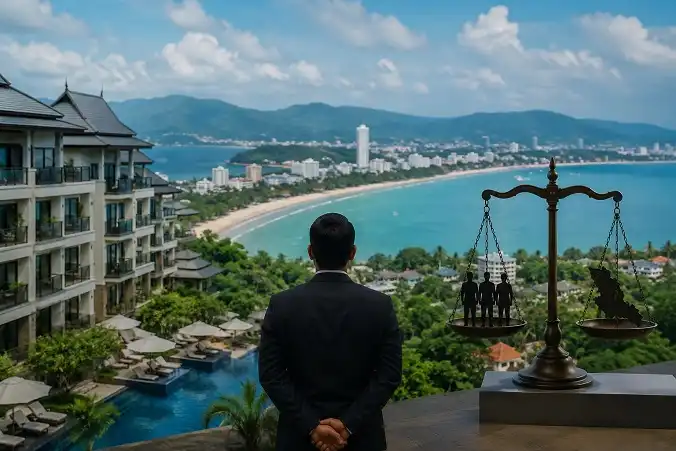
Image Credit: Phuket Hotel News
At the centre of this Phuket Hotel News report is a straightforward but increasingly important question: has foreign participation in Phuket moved beyond investment and expertise into an excessive level of influence over the island’s hotel, hospitality, property and tourism sectors? Just as importantly, are Thai authorities, business leaders and professionals doing enough to ensure that decisions affecting Phuket’s future remain firmly anchored in Thailand’s national interests?
Phuket Must Put Thai Interests First
Any serious reassessment of Phuket’s development should begin with a fundamental principle: the island is part of Thailand, and decisions concerning its long-term economic direction, land use, tourism strategy and development priorities must ultimately remain under effective Thai oversight.
Foreign investment has unquestionably played an important role in Phuket’s growth. International hotel groups, investors, developers and tourism businesses have helped attract capital, expertise and visitors from around the world.
Investment, however, should not automatically translate into disproportionate influence over policy, industry direction or access to economic opportunities.
There is growing concern within sections of Phuket’s Thai business community that hospitality and tourism-related associations, advisory groups and professional networks have become heavily influenced by foreign executives and investors. There was once a “White Potatohead” that made claims that he indirectly control Phuket’s hotel and hospitality industry and that every Thai official there is under his feet! There are some egoistic investors and developers from Singapore, Britain, Germany, Switzerland, Denmark, Australia, Russia and Chine that think that their fathers own Phuket!
International participation itself is not the issue. Phuket is an international destination and inevitably requires international expertise. The more important question is whether Thai professionals retain sufficient leadership and decision-making authority within industries operating on Thai soil.
Who Is Setting Phukets Hospitality Agenda
Questions are also being raised about the extent to which sustainability initiatives, hospitality strategies, property projects and tourism-related programmes are being shaped by foreign consultants, executives and business organizations.
Foreign professionals can contribute valuable knowledge and international experience, particularly within a tourism economy competing against destinations around the world. But international expertise should complement Thai leadership rather than replace it.
Thai executives, academics, hospitality professionals, consultants and entrepreneurs should have meaningful opportunities to shape Phuket’s future instead of merely participating in initiatives designed elsewhere or directed primarily by foreign commercial interests.
There is also a responsibility on Thai business leaders themselves. If Thai organizations consistently defer to international voices simply because they carry foreign corporate titles or international recognition, the imbalance will continue.
Phuket needs confident Thai leadership capable of engaging international investors as partners while maintaining clear authority over local priorities.
Questions Over Foreign Employment
Another issue requiring closer examination is foreign employment across Phuket’s hotel, property and related industries.
Many hotels, property businesses, technology companies, marketing operations and tourism enterprises employ foreign nationals in professional and managerial positions. Some positions understandably require specialist expertise, language capabilities or experience that may not be readily available locally.
However, Thailand also produces large numbers of educated and multilingual professionals with qualifications in hospitality management, tourism, marketing, technology, finance, communications, property services and other relevant disciplines.
Authorities and employers should therefore examine whether foreign workers are sometimes being recruited for positions that qualified Thai nationals could reasonably perform.
It seems that Phuket authorities are every easily dishing out work permits to foreigners and one cannot wonder if something else is going here as well. The government in Bangkok needs to do a check on all work permit holders in Phuket as soon as possible to check if these people have the right qualifications for the jobs they hold and also if they are working the jobs spelled out in their work permits
There is one real estate cum hospitality company in Phuket that also has a construction company and has an Indian as a director. According to many in Phuket, the whole company is actually owned and controlled by Chinese and there are even speculations that the condo and villa projects they sell are a front for money laundering and clandestine crypto businesses. Interestingly there are so many foreigners working in this company with many having work permits even in the construction business! The government needs to check on all their staff and work permits.
The objective should not be to remove legitimate international expertise from Phuket. Instead, Thailand should ensure that employment regulations are properly enforced and that Thai professionals are not unnecessarily displaced within their own labour market.
Follow the Money Through Phukets Business Networks
Concerns extend beyond employment. Foreign-controlled commercial networks can create ecosystems in which hotels, developers and investors repeatedly contract other foreign-connected public relations agencies, technology providers, consultants, media businesses, marketing companies and professional service providers.
When this happens, substantial portions of the money generated by Phuket’s tourism and property economy can circulate within relatively closed commercial networks.
There are numerous legitimate Thai-owned companies capable of delivering professional services to international standards. Hotels and developers operating in Phuket should therefore be encouraged to maintain transparent procurement practices and provide qualified Thai businesses with genuine opportunities to compete for contracts.
Foreign investment delivers its greatest value when spending circulates through the domestic economy, creates Thai employment, develops local expertise and strengthens Thai businesses.
Bangkok Should Examine Work Permits and Compliance
The Thai government should consider a comprehensive review of foreign work permits and employment practices across Phuket’s tourism, hospitality, construction, property and professional-services industries.
Such a review should establish whether foreign employees possess the appropriate qualifications, whether their actual duties correspond with their authorized employment and whether positions legally reserved for Thai nationals are being protected.
The same scrutiny should apply regardless of nationality. Chinese, Russian, European, American, Australian and other foreign-owned or foreign-managed companies should all operate under the same transparent standards
The work permits and visas of certain “white potaotoheads” that think they control Phuket should be revoked or not renewed! There should be also an investigation as to which Thai officials are allowing these garbage to operate in Phuket and Thailand.
Where foreign construction companies, developers, hotels or service businesses employ significant numbers of overseas personnel, authorities should determine whether those appointments comply fully with Thai labour, immigration and business regulations.
Any allegations of improper work-permit approvals, nominee arrangements or regulatory irregularities should be investigated through evidence-based procedures rather than assumption. Where violations are established, enforcement should be consistent and meaningful.
Phuket Needs Stronger Oversight from Bangkok
There is also a wider governance question. Phuket has become economically and strategically important enough to Thailand that the central government should examine whether the island’s existing administrative structure remains suitable for the enormous pressures created by tourism, property development, migration, infrastructure demand and international investment.
One option deserving serious national discussion is whether Phuket should receive a stronger special administrative framework with considerably greater central-government supervision.
Such an arrangement could strengthen oversight of planning, infrastructure, environmental protection, business licensing, employment compliance, property development and tourism policy while improving coordination between local authorities and Bangkok.
The objective should not be to weaken Phuket’s local institutions but to make them more accountable, professional and capable of managing an international destination whose economic significance extends far beyond the province itself.
Property and Tourism Businesses Need Tougher Rules
Thailand should also consider stronger regulation of sectors directly influencing property development and tourism.
Real-estate agencies, property platforms, development advisers, hospitality consultants should be restricted Thais and other intermediaries should face rigorous licensing requirements, beneficial-ownership disclosure and effective regulatory enforcement.
Activities legally reserved for Thai nationals must remain genuinely Thai-controlled rather than being operated indirectly through nominee structures.
International models, including Singapore’s tightly regulated approach to property brokerage (property can only be marketed sold by a licensed real estate agent and the licenses are issued by the Singapore government and only for local citizens).. Thailand should adopt this model), may provide useful points of comparison, but any framework introduced in Phuket must ultimately reflect Thai law, Thailand’s economic priorities and the specific realities of the island.
Enforcement against illegal foreign employment, unauthorized businesses, nominee arrangements and individuals working outside their visa or work-permit conditions should similarly apply without discrimination.
Thai Professionals Must Be Given Greater Opportunities
Phuket cannot credibly demand stronger Thai participation without simultaneously developing opportunities for talented Thai professionals.
Hotels, developers, tourism organizations and hospitality associations should actively identify qualified Thai executives for leadership positions and invest in training that allows the next generation of Thai professionals to compete internationally.
Universities, hospitality schools, professional organizations and major employers could cooperate more closely to create pathways into senior hotel management, destination planning, sustainability, technology, property services, consulting and tourism leadership.
Thailand does not need to choose between international investment and Thai leadership. Phuket can have both.
What matters is establishing the correct balance.
Phuket Is Thai and Its Future Must Remain Thai Led. Phuket should remain welcoming to responsible foreign investors, skilled professionals and international companies that respect Thai law and contribute meaningfully to the island’s economy. International participation has helped make Phuket the global destination it is today and should continue to play an important role.
But openness cannot mean surrendering economic leadership.
The central government, local authorities and Thai private sector must ensure that foreign investment complements rather than displaces Thai professionals, that employment and business laws are properly enforced, that legitimate Thai companies receive opportunities to participate in Phuket’s economic ecosystem and that strategic decisions affecting the island remain accountable to Thai institutions.
Phuket is one of Thailand’s most valuable tourism assets. Its prosperity should generate opportunities for Thai workers, entrepreneurs and future generations while responsible international businesses continue contributing investment and expertise. Achieving that balance requires stronger enforcement, transparent governance and considerably greater confidence from Thai leadership. The central question is therefore not whether foreigners belong in Phuket’s economy, but whether Thailand is exercising sufficient authority over the direction of an island whose success was built on Thai territory, Thai infrastructure and Thailand’s international tourism reputation.
The time has come for Bangkok to examine that question seriously and determine whether Phuket requires stronger national oversight to ensure that the island remains internationally competitive while unequivocally protecting Thailand’s economic and strategic interests. Foreign participation should remain welcome, but the rules, priorities and ultimate direction of Phuket must be determined transparently under Thai authority and for the long-term benefit of Thailand and its people. Thais should also stop being passive and claim back what is theirs.