
InterContinental Phuket Resort in Kamala has reached a major sustainability milestone, becoming the first InterContinental hotel in Thailand to achieve certification from the Global Sustainable Tourism Council. The recognition strengthens the Phuket luxury resort’s environmental credentials while highlighting how sustainability is becoming increasingly central to the future of high-end hospitality on the island.
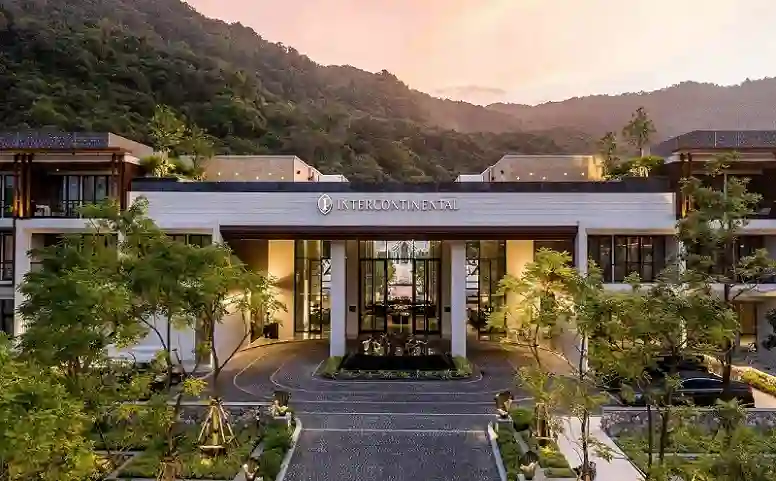
Image Credit: InterContinental Phuket Resort
As international travelers place greater scrutiny on the environmental and social impact of their vacations, this Phuket Hotel News report looks at how the beachfront property is combining luxury with measurable sustainability initiatives covering food waste, water, energy, local sourcing, community involvement, and protection of Kamala’s coastal environment.
Phuket Resort Secures International Sustainability Recognition
The GSTC certification makes InterContinental Phuket Resort the third IHG Hotels and Resorts property in Thailand to receive the internationally recognized sustainability certification, joining Six Senses Yao Noi and Six Senses Samui.
Certification was independently audited by Control Union Certifications, a GSTC-accredited certification body. The assessment examines sustainable tourism performance across four principal areas: sustainable management, socioeconomic impacts, cultural impacts, and environmental impacts.
For InterContinental Phuket Resort, the certification adds another significant credential to a property that already holds LEED Gold status and has been awarded Two MICHELIN Keys for its luxury hospitality experience.
General Manager Bjorn Courage said the certification independently validates measures that the resort team has been developing over many years.
“For us, responsible luxury means creating exceptional experiences while taking equal responsibility for the environment, our community and the destination we call home,” Courage said, adding that certification provides a stronger framework for continued improvement rather than representing the end of the resort’s sustainability journey.
Food Waste Becomes Fertilizer Instead of Rubbish
One of the resort’s most practical sustainability programs starts inside its kitchens, where food waste is being transformed from a disposal problem into a usable resource.
An Oklin Food Waste Composter can process approximately 125 kilograms of food waste daily, reducing its volume by between 80 and 90 percent within 24 hours. The system converts discarded food into nutrient-rich fertilizer, with approximately 360 kilograms potentially generated each month.
Instead of being treated simply as waste, the resulting fertilizer is distributed to local organizations and schools while also being used in the resort’s gardens and by farms.

Image Credit: InterContinental Phuket Resort
Technology is also being employed before food becomes waste. AI-powered monitoring provides culinary teams with real-time information about discarded ingredients and meals, allowing chefs to adjust purchasing, inventory management, production, and portion sizes.
The objective is to prevent unnecessary waste rather than merely finding more environmentally responsible ways to process it afterward.
Proud Kamala Takes Sustainability Beyond Resort Grounds
InterContinental Phuket Resort’s sustainability strategy also extends beyond the boundaries of the property through Proud Kamala, its long-term program supporting the cleanliness of approximately three kilometers of Kamala Beach.
The initiative goes further than occasional beach cleanups by helping prevent rubbish from entering the ocean while encouraging community participation, environmental awareness, and local employment.
For Phuket’s tourism industry, maintaining clean beaches is both an environmental responsibility and an economic necessity. Kamala’s coastline is a fundamental part of the destination’s international appeal, meaning environmental degradation could ultimately affect residents, businesses, visitors, and the wider tourism economy.
The resort’s efforts extend offshore through The Ocean For All Foundation’s License to Clean, an environmentally focused coastal cleaning catamaran operating around Kamala.
Waste collected from surrounding waters is brought ashore and directed toward appropriate recycling, reuse, or disposal, creating a coordinated approach connecting beach protection with marine conservation.
Water Conservation Happens Behind the Luxury Experience
Some of the property’s biggest environmental measures are largely invisible to guests.
Approximately 80 percent of the water required for landscape irrigation is supplied using treated wastewater, reducing dependence on potable water. This is supplemented by rainwater harvesting and additional conservation measures.
Water management is particularly important for resort destinations where extensive landscaped areas, swimming pools, guest facilities, restaurants, and back-of-house operations can create substantial demand.

Image Credit: InterContinental Phuket Resort
Energy efficiency was also incorporated into the property’s development. As a LEED Gold-certified resort, its infrastructure was designed around measures intended to achieve approximately 25 percent energy savings.
LED lighting, motion sensors, lighting controls, and ongoing energy monitoring form part of that strategy.
These less visible systems illustrate an increasingly important shift in hospitality, where sustainability credentials depend not only on guest-facing environmental campaigns but also on the engineering and operational systems running continuously behind the scenes.
Phuket Luxury Dining Gets a Circular Makeover
Food and beverages represent another major component of the sustainability program.
InterContinental Phuket Resort works with more than 19 farmers and communities throughout Thailand, strengthening connections between its culinary operations and domestic producers.
The circular model becomes particularly clear through partnerships with farms in neighboring Phang Nga, where organic vegetables can be grown using fertilizer produced from composted food waste.
That creates a cycle in which waste leaves the resort, becomes fertilizer, supports agricultural production, and can ultimately help produce ingredients that return to the dining table.
Sustainability has even reached the cocktail menu at Sipping Tiger.
Working with Chulalongkorn University and Kasetsart University, the bar team has explored locally sourced plants and botanicals for innovative zero-waste cocktails. Underused and surplus plant materials can be transformed into drinks rather than discarded, combining waste reduction with an opportunity to showcase Thailand’s biodiversity.
The collaboration also demonstrates how universities, hospitality operators, farmers, and communities can participate in broader sustainable food systems.
Responsible Luxury Becomes a Competitive Advantage
The resort’s combination of GSTC certification, LEED Gold credentials, and Two MICHELIN Keys presents a notable argument about the direction of Phuket’s luxury hotel sector.
Luxury was traditionally associated primarily with space, service, architecture, cuisine, and exclusivity. Increasingly, however, sophisticated travelers and hospitality companies are adding environmental responsibility, community impact, sourcing, and resource efficiency to that definition.
Courage said the resort’s ambition extends beyond simply reducing its environmental footprint, with hospitality instead being used as a force for positive impact.
For Phuket, where tourism prosperity is closely connected to the quality of beaches, oceans, communities, and natural resources, that philosophy has considerable relevance.
InterContinental Phuket Resort’s latest recognition therefore represents more than another certificate for its awards cabinet. It demonstrates how environmental accountability can become integrated into luxury operations without diminishing the guest experience. More importantly, its combination of measurable resource management, community engagement, circular food systems, and coastal protection offers a model that could encourage more Phuket hotels to view sustainability as an essential long-term investment in both their businesses and the destination itself.
For more on InterContinental Phuket Resort, visit:
https://phuket.intercontinental.com