
Hotel and Hospitality News: US Travel Momentum Weakens
Major global hotel operators are signaling that the once-robust US travel rebound is losing steam, as demand cools across price-sensitive and midscale segments. The latest quarterly updates from Hilton, InterContinental Hotels Group (IHG), and others show revenue per available room (RevPAR) growth flattening, even as luxury travel remains resilient. This Hotel and Hospitality News report highlights how a shifting macroeconomic backdrop, cost pressures, and more cautious consumer spending are reshaping performance expectations across both the US and UK hospitality markets.
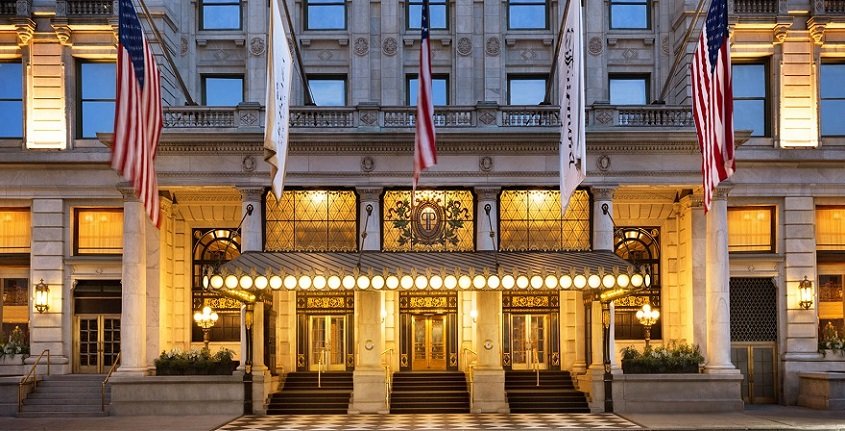
Major hotel chains warn of a cooling US travel market as luxury holds strong and midscale demand softens
Image Credit: The Plaza Hotel New York
Operators Trim Forecasts Amid Uneven Performance
IHG reported global RevPAR growth of just 0.1% in the third quarter, including a 1.6% decline in the US, citing softer corporate travel and waning domestic leisure. Hilton’s US RevPAR fell 2.3% in the same period, prompting the company to trim its 2025 revenue outlook to flat or up just 1%. While luxury and resort properties continue to post stronger results, midscale and economy hotels are bearing the brunt of weaker midweek corporate and budget travel.
Across the Atlantic, Premier Inn parent Whitbread and budget rivals Travelodge and Dalata are warning of similar pressures. Whitbread’s update showed falling food-and-beverage sales, reduced half-year profit, and lingering cost inflation, while Travelodge described early 2025 trading as “challenging,” particularly in London. Dalata Hotel Group, which operates Clayton and Maldron brands, also reported a 3.5% year-on-year RevPAR drop in its UK portfolio.
Causes Behind the Dip
US operators point to several intertwined factors behind the slowdown: softer domestic leisure, shrinking midweek corporate travel, and cost-conscious consumers responding to inflation and economic uncertainty. Hilton’s leadership emphasized that luxury demand remains strong, but economy and midscale properties are facing rate resistance. In the UK, weaker event calendars, rail disruptions, and cost inflation continue to squeeze margins, especially for hotels with heavy F&B exposure.
Compounding the issue, new hotel supply has started to outpace demand growth in both markets. In the UK, tracking data shows RevPAR sliding modestly in early 2025, suggesting pricing pressure in lower segments—a pattern often mirrored in the US when economic headwinds strengthen.
A Split Market Emerges
Data from IHG and Hilton underscores a “two-speed” recovery in the US: luxury and destination-led hotels are holding strong, supported by affluent travelers, while budget and midscale properties face reduced spending. In the UK, operators note that peaks tied to major events are helping offset weekday slumps but not enough to lift overall performance. The result is a more polarized landscape where brand positioning and location matter more than ever.
Strategic Shifts for Owners and Investors
For hotel owners, 2025 is shaping up as a year demanding sharper operational control. US operators are prioritizing rate protection, cost containment, and targeted sales strategies toward higher-yield segments such as luxury, group bookings, and inbound international markets. Midscale and economy properties, however, may face increasing pressure to discount rates to maintain occupancy.
Hilton remains confident about long-term fundamentals, expecting net unit growth of 6.5%–7% in 2025, signaling optimism about future demand. Yet, developers are urged to stress-test new projects against slower RevPAR growth and elevated operating costs. In the UK, portfolio strategies like Whitbread’s conversion of restaurants into hotel rooms reveal a shift toward accommodation-focused assets to offset persistent F&B challenges.
The Broader Outlook
The 2025 hotel outlook in the US can best be described as “cooler but not collapsing.” The market is transitioning into a segmented environment where luxury and destination-driven demand continue to outperform, while midscale and economy tiers face periodic softness. The guidance from major brands like IHG, Hilton, and Whitbread signals a need for disciplined pricing, smarter segmentation, and selective expansion. For now, investors and operators alike must brace for a slower but more strategic growth cycle—until broader economic clarity and traveler confidence return to full strength.
For the latest Hotel and Hospitality News, keep on logging to Phuket Hotel News.