
Hotel and Hospitality News: Shifting Sentiments at the Lodging Conference 2025
The 2025 Lodging Conference in Phoenix brought together the most influential leaders of the global hospitality industry to assess the state of the sector amid volatile economic conditions. While optimism persisted, there was a noticeable sense of caution compared to last year. Hotel executives discussed rising tariffs, unpredictable trade policies, and the need to embrace artificial intelligence as both a tool for innovation and survival. According to this Hotel and Hospitality News report, many panelists agreed that 2025 may be defined by adaptability — those who evolve fast will flourish while others struggle to maintain margins.
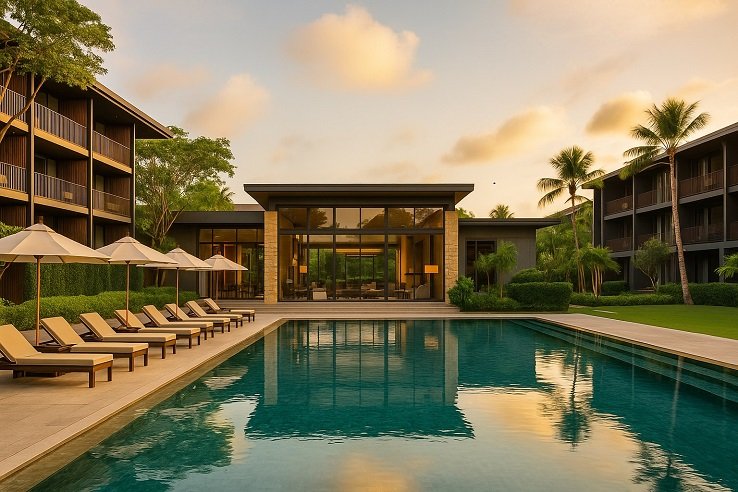
Hotels brace for change as AI and lifestyle trends redefine guest experiences in 2025.
Image Credit: AI-Generated
Economic Challenges Continue to Test the Industry
Despite signs of recovery in tourism and occupancy rates, the hotel industry still faces significant headwinds. Marriott International’s group president for the U.S. and Canada, Liam Brown, described a challenging climate where operational costs — from labor to insurance and real estate — remain steep. CBRE’s data presented at the conference revealed that most hotel segments in the U.S. experienced year-over-year declines in gross operating profit as of July, largely due to rising costs.
Meanwhile, tariff pressures continue to rattle developers. Choice Hotels’ Chief Development Officer, David Pepper, noted that while the industry is slowly adjusting, uncertainty over further trade shifts keeps many investors hesitant. He added that the Federal Reserve’s decision to cut interest rates by 25 basis points offered some relief, with more reductions likely before the year ends. Yet, with construction costs still high and political trade tensions fluctuating under the Trump administration’s policy changes, many projects remain paused.
Opportunities in Downturns and Smart Development
Despite the financial turbulence, several experts insisted that downturns can open windows for strategic growth. Pepper advised developers to think long-term, arguing that starting new projects now means being ready when the market rebounds in two years. “You’re going to refinance and be in a great spot because you’ll be the newest property in the market,” he explained.
For many investors, conversions and acquisitions are emerging as the smarter route. The Asian American Hotel Owners Association, under the leadership of Kamalesh Patel, is encouraging members to reposition existing properties. Hilton is also capitalizing on this movement with the launch of its new upscale collection brand, Outset, designed to convert boutique hotels into high-end, story-driven destinations under the Hilton banner.
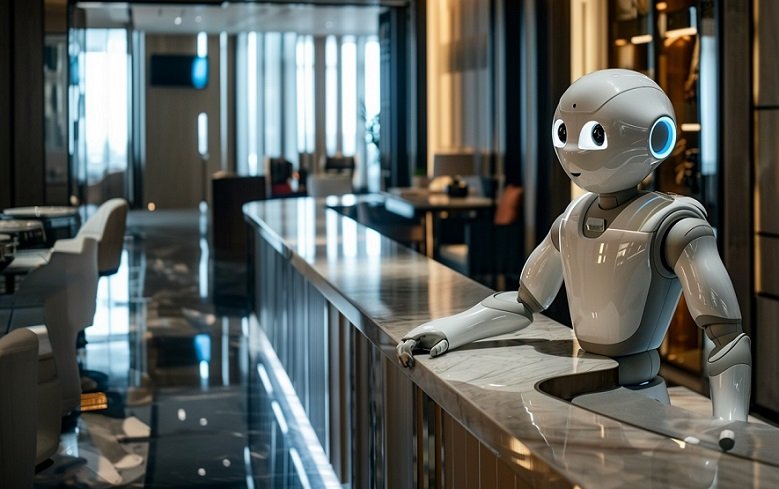
AI will be playing a bigger role in the Hotel industry in coming years.
Image Credit: AI-Generated
Lifestyle Hotels Remain a Hot Commodity
The dominance of lifestyle-oriented hotels was another recurring theme. Marriott and Wyndham introduced new brands tailored for modern travelers seeking authenticity and adventure — Marriott unveiled an outdoors-themed collection, while Wyndham expanded into the economy lifestyle segment. Marriott’s CFO, Leeny Oberg, emphasized that “lifestyle brands are super popular” because guests now expect bespoke, emotionally resonant experiences.
Ayesha Molino of MGM Resorts International echoed this sentiment, noting that travelers increasingly want immersive stays that reflect personal values and individuality. As Molino prepares to take over as MGM’s Chief Operating Officer, she believes that hotels that fail to integrate personalization into their offerings risk losing relevance in 2025’s competitive landscape.
Artificial Intelligence Becomes the Game Changer
Artificial intelligence dominated the conference conversations. Molino highlighted AI’s potential not just for operational efficiency but for elevating guest engagement. “AI helps us anticipate guest needs and tailor experiences in real time,” she said. Greg Juceam, CEO of Extended Stay America, predicted that AI will soon revolutionize how travelers search for and book hotels, turning online discovery into a far more personalized process.
However, some industry leaders expressed frustration at how slow hotels have been to embrace technology. “Technology in hospitality today, for lack of better words, sucks,” said AAHOA’s Patel, stressing that the real race lies in who can standardize AI tools effectively first. Red Roof’s president, Zack Gharib, noted that while AI is evolving at breakneck speed, hotels must balance innovation with cultural integrity and brand strategy. “The only thing going faster than AI is my hair turning gray,” he joked, underscoring both the excitement and the pressure facing hoteliers today.
A Transformative Future Ahead
The Lodging Conference made one thing clear — the future of hospitality hinges on adaptability and innovation. Economic uncertainty may persist, but the fusion of AI-driven personalization and lifestyle branding promises to redefine guest expectations. Hotels that strategically invest in technology, rethink their positioning, and prioritize authentic experiences will emerge as leaders in a transformed marketplace. The pace of change may be daunting, but the potential rewards are immense. As 2025 progresses, the world will watch which brands harness this transformative energy and set new benchmarks for the industry.
For the latest Hotel and Hospitality News, keep on logging to Phuket Hotel News.